2025 Workshop
08 September 2025
Faculdade de Engenharia da Universidade do Porto, Porto, Portugal
Room B001
MAP-tele Doctoral Program In Telecommunications
The MAP-tele Doctoral Program in Telecommunications is a joint venture of University of Minho, University of Aveiro and University of Porto, three Portuguese Universities with a strong tradition in the area of Telecommunications Engineering. The program represents a fusion of the doctoral offers in Telecommunications in the three institutions and constitutes a unified effort to prepare highly qualified human resources in Telecommunications. The program is supported by an academic staff of more than 150 PhDs whose research and development activities cover a wide range of topics, ranging from theoretical and fundamental aspects to the experimental and applied areas of Telecommunications, and comprehends wide-ranging collaborative work with leading industries in this country and abroad. The MAP-tele Doctoral Program in Telecommunications targets both national and international audiences and is designed for excellence and competitiveness at the international level. It aims to prepare selected students for leadership in research and development careers in industry, academia and independent entrepreneurial initiatives.
The 2025 MAP-tele Workshop is organized by the first-year students of the most recent MAP-tele editions: 2022-2023 (U.Aveiro), 2023-2024 (U.Minho) and 2024-2025 (U.Porto) and intends to attract original, pertinent and relevant contributions on the technological, organizational and management dimensions of the largely multidisciplinary field of Telecommunications and Information Systems and Technologies.
Submissions are mandatory for MAP-tele PhD students. Specifically, third-year (and above) students should present their work as an oral presentation, as specified in the Authors Submissions guidelines. Research centres affiliated with the three Universities (IT, IEETA, FSCOD, INESC TEC, LIACC, Centro Algoritmi, CCTC) as well as leading companies associated with the program are also invited to present their work at the Workshop.
This year’s edition (15th edition) of the MAP-tele Workshop will be hosted by Faculdade de Engenharia da Universidade do Porto on 08th September.
MAP-tele universities





Important dates
Abstract submission
Submit (by sending an e-mail to maptele2025@fe.up.pt) title, abstract (max 250 words), author(s), and affiliation(s);
Feedback reception
Receive feedback from the 2025 MAP-tele Workshop Steering Committee on the submitted title and abstract;
Full paper submission
Submit (by sending an e-mail to maptele2025@fe.up.pt) a 4–6 page full paper (IEEE format) detailing your research topic, results, and future goals [content from recent publications may be reused];
Participants Registration
Please register for the 2025 MAP‑tele Workshop by completing the following Google Forms link. Registration is mandatory for all participants, including presenters and attendees without submissions.
Registration
Committees

Prof. Adriano Moreira
University of Minho
Prof. Aníbal Ferreira
University of Porto
Prof. Daniel Corujo
University of Aveiro
Prof. Henrique Salgado
University of Porto
David Cunha
University of Porto
Leonardo Rama
University of AveiroDavid Cunha
University of Porto
Miguel Soares
University of Aveiro
Alisson Chaves
University of Aveiro
Ebrahim Darabi
University of AveiroLeonardo Rama
University of Aveiro
Nwanze Nzekwu
University of AveiroDavid Cunha
University of AveiroEbrahim Darabi
University of AveiroLeonardo Rama
University of AveiroMiguel Soares
University of AveiroKeynote Speakers

Dr. Henrique Miranda
Stanford University, USRapid Eye on Earth: How Small Companies are driving Satellite Earth Observation
Abstract
Earth observation (EO) satellites, initially pioneered by large government space agencies in the 1970s, historically entailed development timelines of approximately a decade from concept to launch, alongside investments nearing $1 billion – metrics that have not significantly improved over time. However, the recent proliferation of small to medium-sized commercial EO satellites, launched by a growing number of private companies, has dramatically reduced both mission development time and cost.
This presentation will examine the principal forces driving this transformation, the enabling technologies employed in EO satellites, their design and testing methodologies, their sensor types, and the delivery mechanisms of the user data products. A few examples of recently launched satellites that went from concept to orbit in exceptionally short timeframes – some in less than one year – will be discussed. The author will also share insights into design and operational challenges encountered during these projects.
Speaker biography
Dr. Henrique Miranda specializes in satellite communication systems with a career spanning academia and commercial aerospace. His journey began at the University of Porto, where he earned his Licenciatura and M.Sc. degrees in electrical and computer engineering. After joining the ECE Department as a teaching assistant professor in 1999, he was awarded the Fulbright Ph.D. Scholarship to study at Stanford University. During his Ph.D., he developed ultra-low power, high-rate communication integrated systems for wireless brain implants, pioneering technology aimed at restoring movement in patients with spinal cord injuries.
Since 2010, Henrique has brought his expertise to the commercial aerospace sector, where he has become deeply involved in the design, testing, and operation of low-Earth orbit satellites. As the principal RF/Comms engineer at companies like Skybox Imaging, Google, Planet Labs, and currently at Muon Space, he has been instrumental in developing communication and RF payload systems for about 30 medium-sized Earth observation satellites. His work has enabled missions that are actively improving the understanding of our planet.
Dr. Henrique Salgado
University of Porto, PTSatellite Quantum Communications: Challenges and Opportunities
Abstract
Satellite-based Quantum Key Distribution (QKD) has emerged as a promising approach for enabling secure, long-distance communication by leveraging the fundamental principles of quantum mechanics. While fiber-based QKD is constrained by high attenuation over large distances, free-space optical (FSO) links via satellites can extend coverage to the global scale, with attenuation occurring mainly in the lower atmosphere. This presentation will provide an accessible overview of satellite quantum communications, drawing on insights from recent experimental missions—such as the Micius satellite. Key discussion topics will include the relationship between quantum key rates and channel attenuation, the unique effects of geometric loss and atmospheric turbulence on quantum channels, and the impact of satellite orbits and ground station location on system performance. Major challenges facing satellite QKD will be highlighted, alongside potential opportunities for advancing the technology. The talk is intended as a general introduction to the field, aimed at fostering discussion within the MAP-tele community.
Speaker biography
Dr. Henrique M. Salgado graduated in Applied Physics (Optics and Electronics) from the University of Porto in 1985 and received the PhD degree in Electronic Engineering and Computer Systems from University of Wales in 1993. He joined the Department of Electrical Engineering and Computers of the University of Porto in 1999 as an Invited Assistant Professor and in 2003 he became Associate Professor. Since 1995 that he heads the Optical and Electronics Area of INESC TEC, begin responsible for several national and internationally funded (EU) research projects. From 1997-1999 he was Research Fellow at the Department of Electrical and Electronic Engineering of the University College London, UK and previously Research Assistant at the School of Electronic Engineering and Computer Systems, Bangor, UK. He is the author and co-author of numerous international publications in the field of optical fibre communications and microwaves. His current research interests include: radio-over-fiber technology and microwave photonics, digital equalization in coherent optical systems, all-optical networks, modeling of nonlinearities and design of compact multiband antennas. He is a member of the Photonics and Communications societies of the IEEE.
Program
|
8h30-9h00 |
Registration |
|
9h00-9h15 |
Opening session |
|
MAP-Tele Director – Prof. Anibal Ferreira |
|
|
Organizing Committe Representative |
|
|
DEEC Director – Prof. Manuel Ricardo |
|
|
9h15-10h00 |
Keynote I: Prof Henrique Miranda |
|
Moderator: Prof. Aníbal Ferreira, U.Porto |
|
|
Rapid Eye on Earth: How Small Companies are driving Satellite Earth Observation |
|
|
10h00-10h45 |
Coffe break + Poster Session |
|
Mohamed E. Ghatas: Non-volatile Memristor-based 1-bit Reconfigurable Intelligent Surface Towards a Greener 6G |
|
|
Eronmhon Augustine Ogobor: Optical-Based Partial Chromatic Dispersion Compensation of 12.5 Gbps Transmission With Optimised Chirped FBG Design for Access Networks |
|
|
João Santos: A Framework for Cooperative ITS Safety Applications Development |
|
|
Luís Rodrigues: Visible Light Communication Systems Architectures for the Internet of Things |
|
|
Paulo Furtado Correia: Obstacle-Aware Scheduling and Positioning of Mobile IAB Node to Maximize Network Capacity for Targeted Users |
|
|
10h45-11h30 |
Oral presentations I |
|
Chairperson: Prof. Paulo Monteiro, U.Aveiro |
|
|
Filipe B. Teixeira: An Underwater-to-Shore Communication Solution using Data Mules and Airborne Networks |
|
|
Abdelghafour Abraray: Towards Intelligent Beamforming: The Role of Smart Metasurfaces in Future Telecom |
|
|
Bruno T. Brandão: Hybrid FSO-mmWave Systems for Ultra-Reliable and High-Capacity Wireless Communications |
|
|
João F. Pereira: Preliminary Design for the Deployment and Consumption of Vehicle-Generated Geo-Anchored Datasets in NDN-Based VANETs |
|
|
11h30-12h30 |
Entrepneurship Session |
|
Moderator: Prof. Adriano Moreira, U.Minho |
|
|
Ana Tavares: PICadvanced |
|
|
Mário Rui: Wavecom |
|
|
Pedro Pinto: UPTEC |
|
|
12h30-14h00 |
Lunch + Poster Session |
|
Mohamed E. Ghatas: Non-volatile Memristor-based 1-bit Reconfigurable Intelligent Surface Towards a Greener 6G |
|
|
Eronmhon Augustine Ogobor: Optical-Based Partial Chromatic Dispersion Compensation of 12.5 Gbps Transmission With Optimised Chirped FBG Design for Access Networks |
|
|
João Santos: A Framework for Cooperative ITS Safety Applications Development |
|
|
Luís Rodrigues: Visible Light Communication Systems Architectures for the Internet of Things |
|
|
Paulo Furtado Correia: Obstacle-Aware Scheduling and Positioning of Mobile IAB Node to Maximize Network Capacity for Targeted Users |
|
|
14h00-14h45 |
Keynote II: Prof Henrique Salgado |
|
Moderator: Prof. Aníbal Ferreira, U.Porto |
|
|
Satellite Quantum Communications: Challenges and Opportunities |
|
|
14h45-16h00 |
Oral presentations II |
|
Chairperson: Prof. Bruno Dias, U.Minho |
|
|
Ehsan Atefat Doost: Machine Learning for Radio Resource Allocation in Physical-Layer Network Coding-Enabled Mobile Networks |
|
|
Paulo J. Araujo: Proactive Migration in Vehicular Edge Computing using Machine Learning and Location Data |
|
|
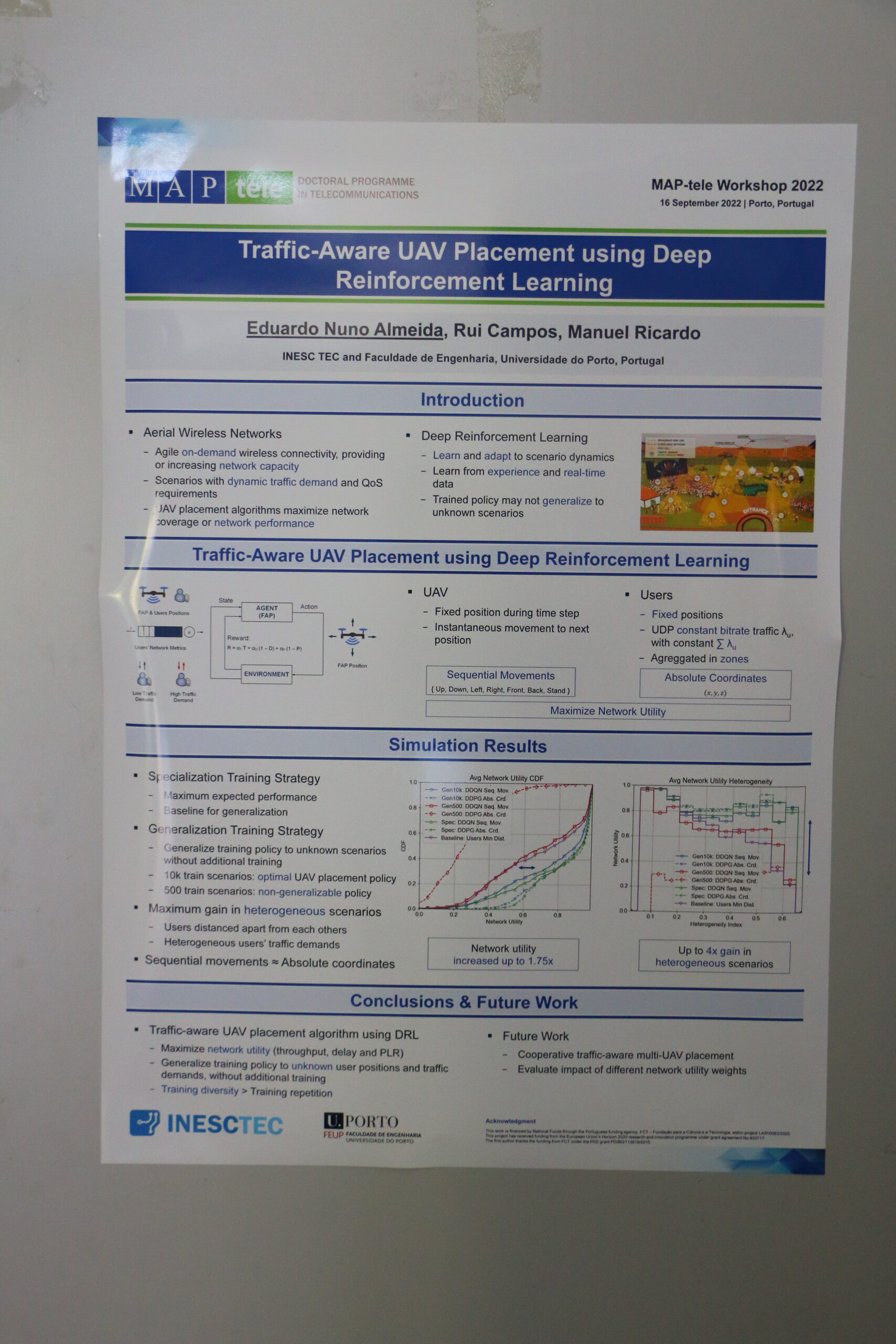
Kamran Shafafi: AI-Driven Traffic and Obstacle-aware Positioning algorithm for UAV-based Networks |
|
|
Eduardo Nuno Almeida: Machine Learning Based Propagation Loss Model for ns-3 |
|
|
16h00-16h30 |
Coffe break + Poster Session |
|
Mohamed E. Ghatas: Non-volatile Memristor-based 1-bit Reconfigurable Intelligent Surface Towards a Greener 6G |
|
|
Eronmhon Augustine Ogobor: Optical-Based Partial Chromatic Dispersion Compensation of 12.5 Gbps Transmission With Optimised Chirped FBG Design for Access Networks |
|
|
João Santos: A Framework for Cooperative ITS Safety Applications Development |
|
|
Luís Rodrigues: Visible Light Communication Systems Architectures for the Internet of Things |
|
|
Paulo Furtado Correia: Obstacle-Aware Scheduling and Positioning of Mobile IAB Node to Maximize Network Capacity for Targeted Users |
|
|
16h30-18h00 |
Alumni Insights |
|
Moderator: Prof. Daniel Corujo, U.Aveiro |
|
|
Jacklyn Reis: PICadvanced |
|
|
Hugo Santos: Aerospacelab |
|
|
Rui Gomes: InnoPhase |
|
|
Qi Luo: University of Hertfordshire |
|
|
18h00-18h15 |
Closing Session |
|
MAP-Tele Directors – Prof. Adriano Moreira (U.Minho) and Prof. Daniel Corujo (U.Aveiro) |
|
|
Organizing Committe Representative |
|
|
FEUP Director – Prof. Rui Calçada |
|
|
18h15-18h45 |
Porto D´Honra |
Participating Companies


Venue
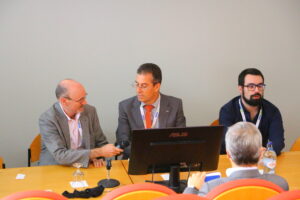
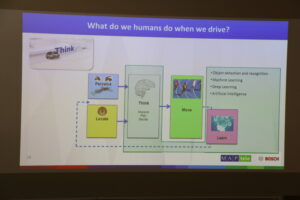
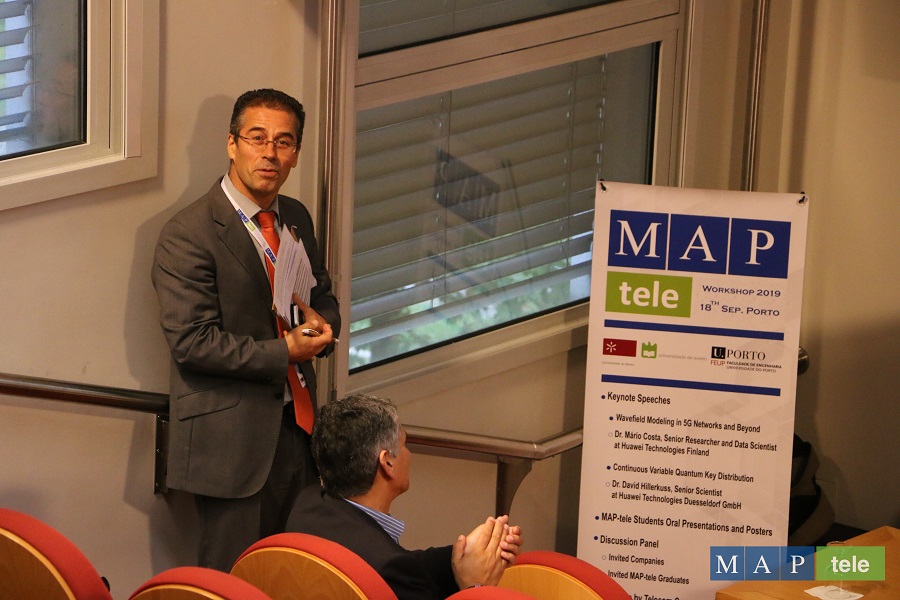
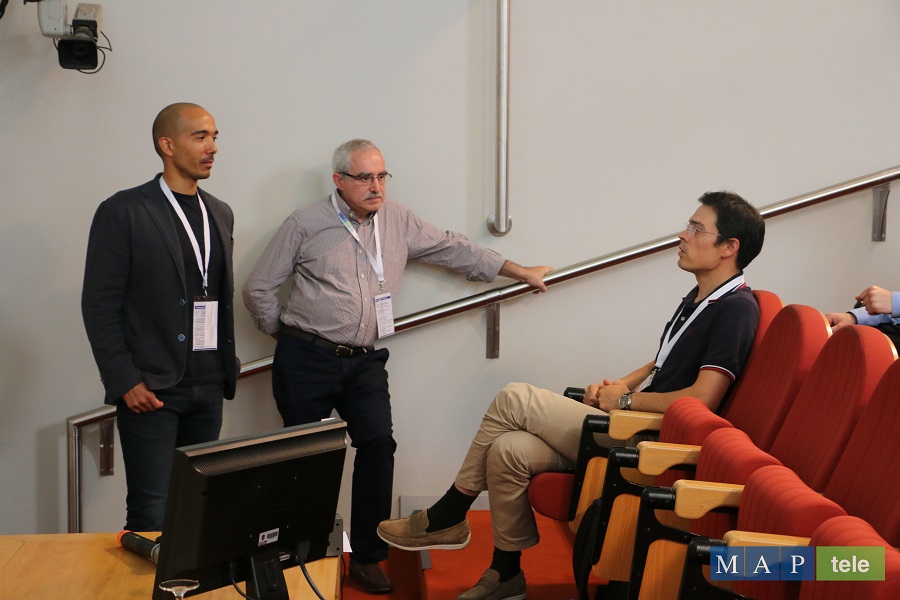
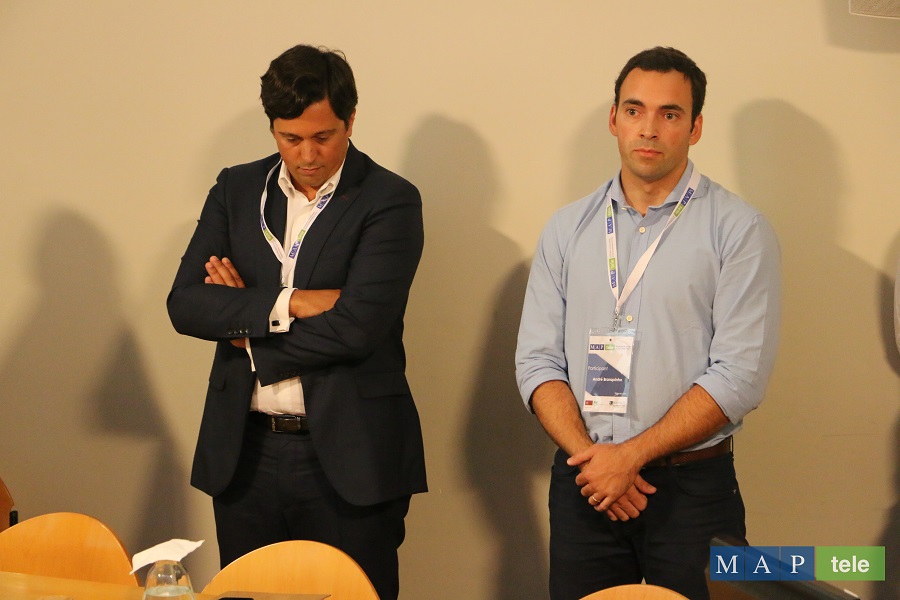
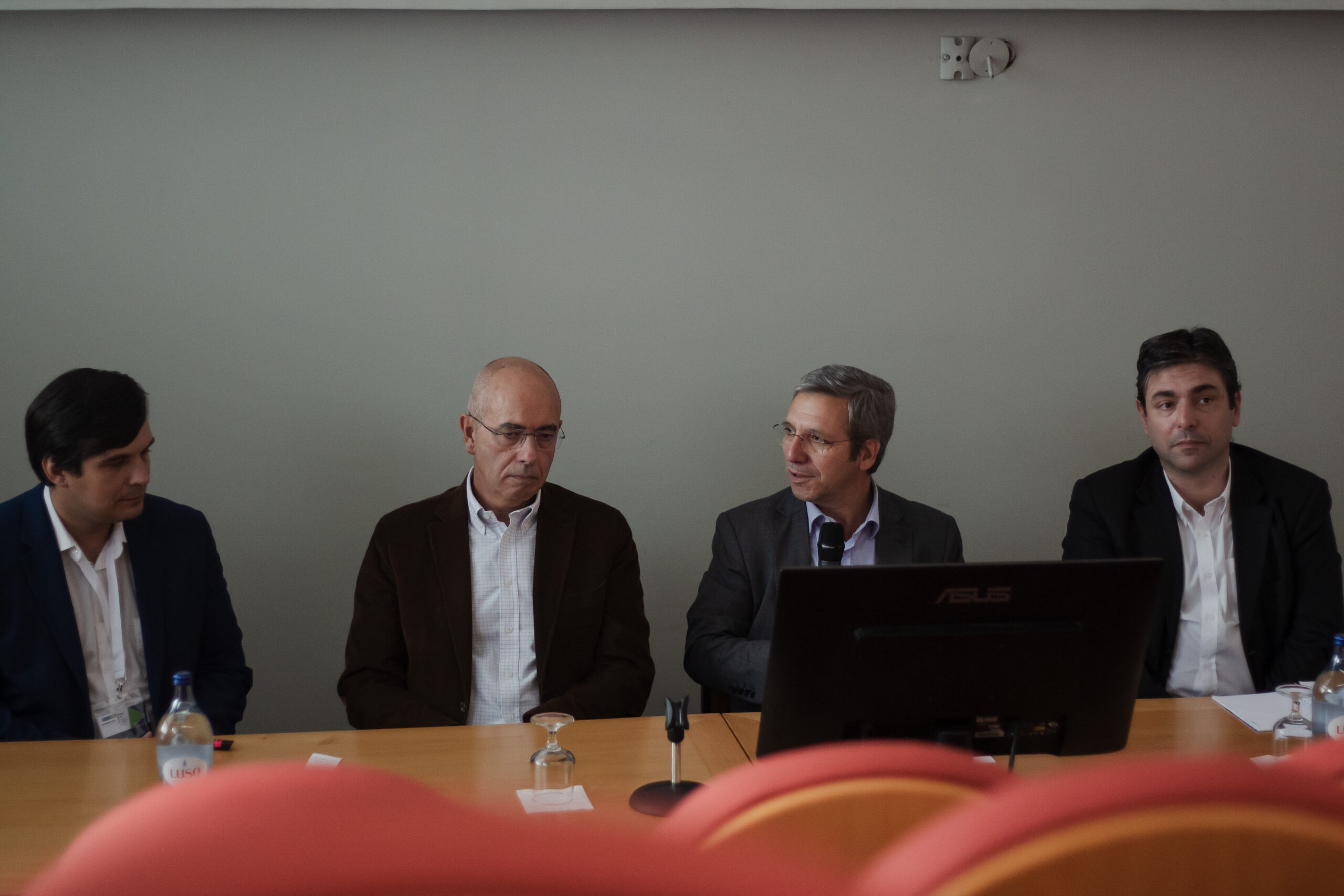
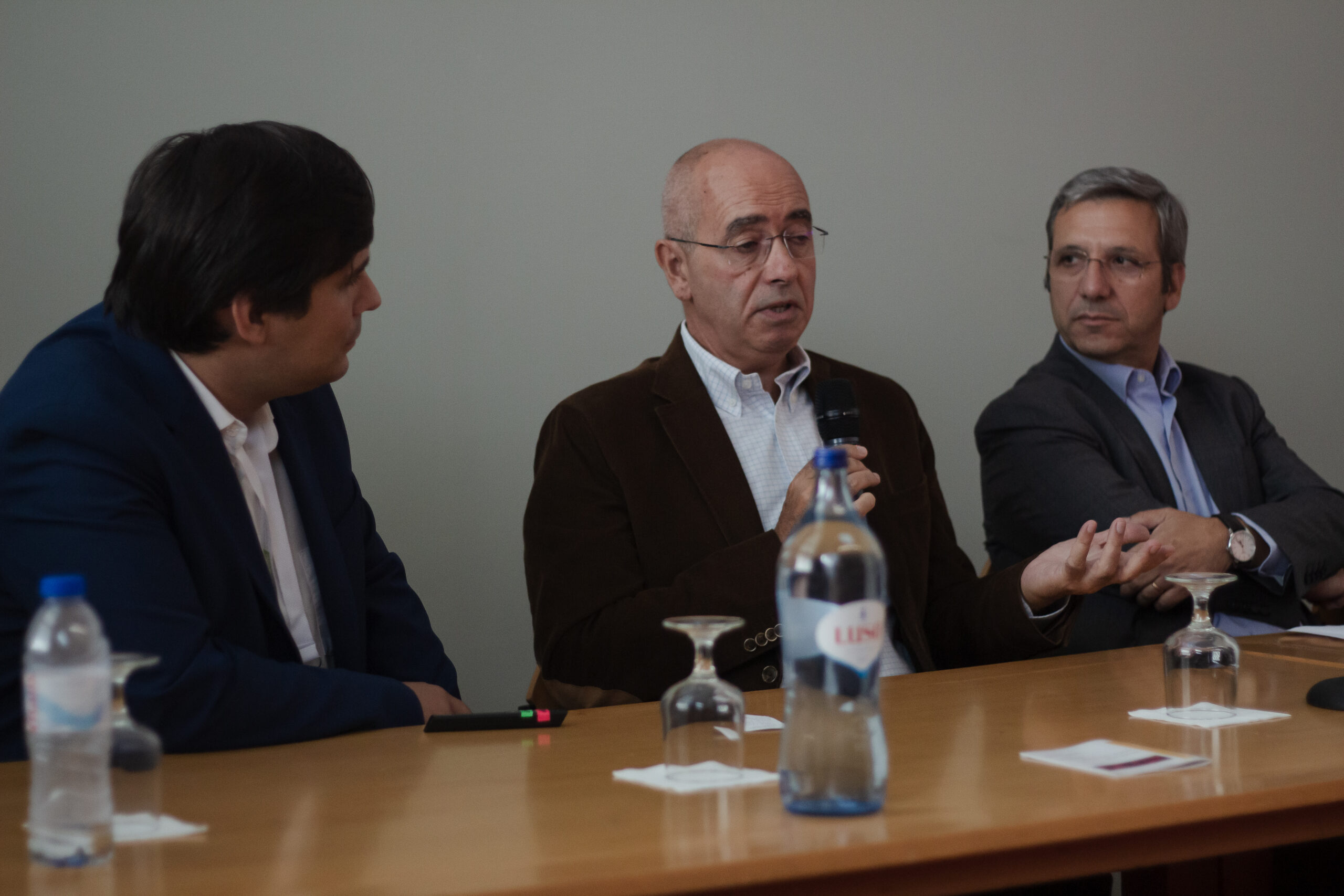
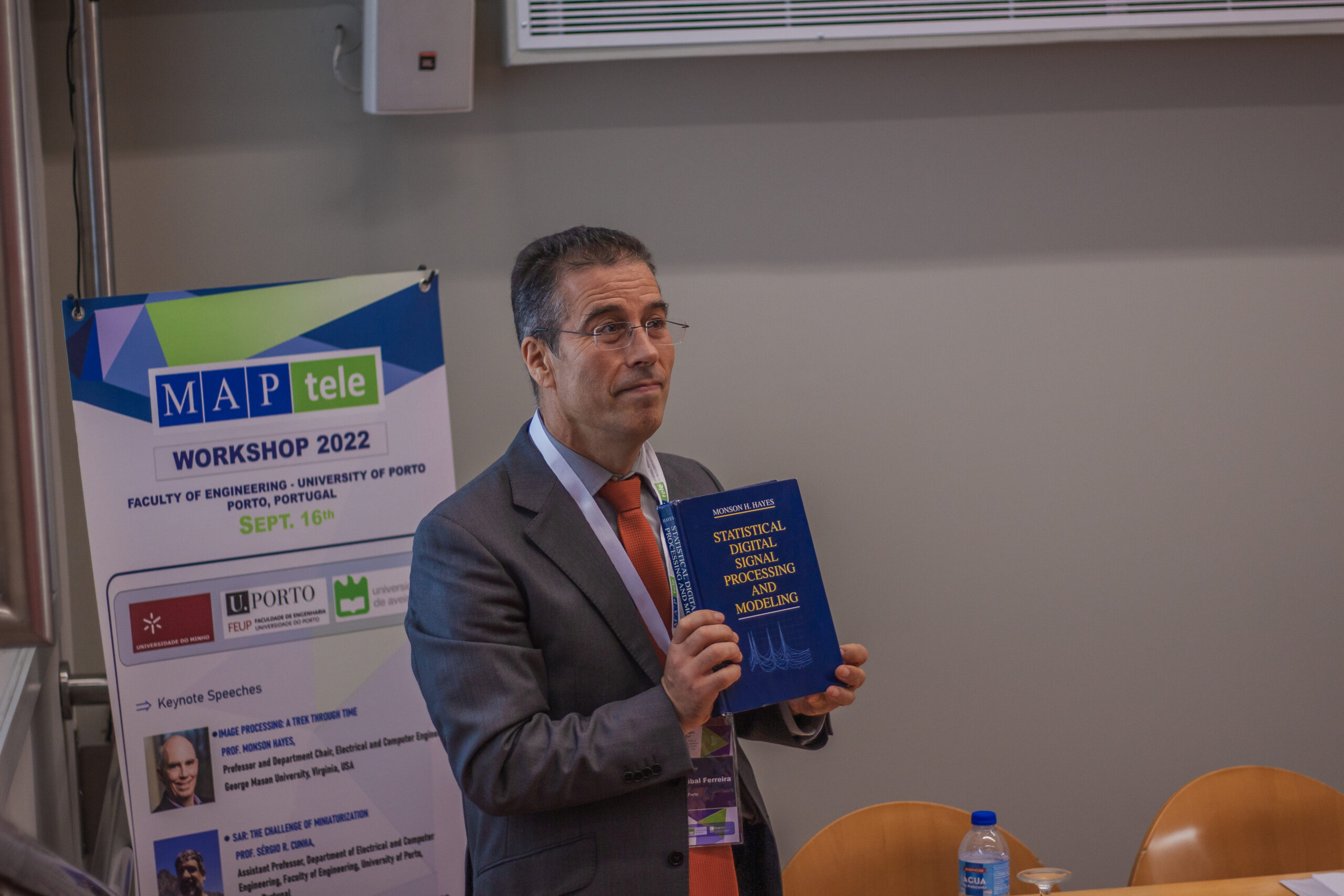
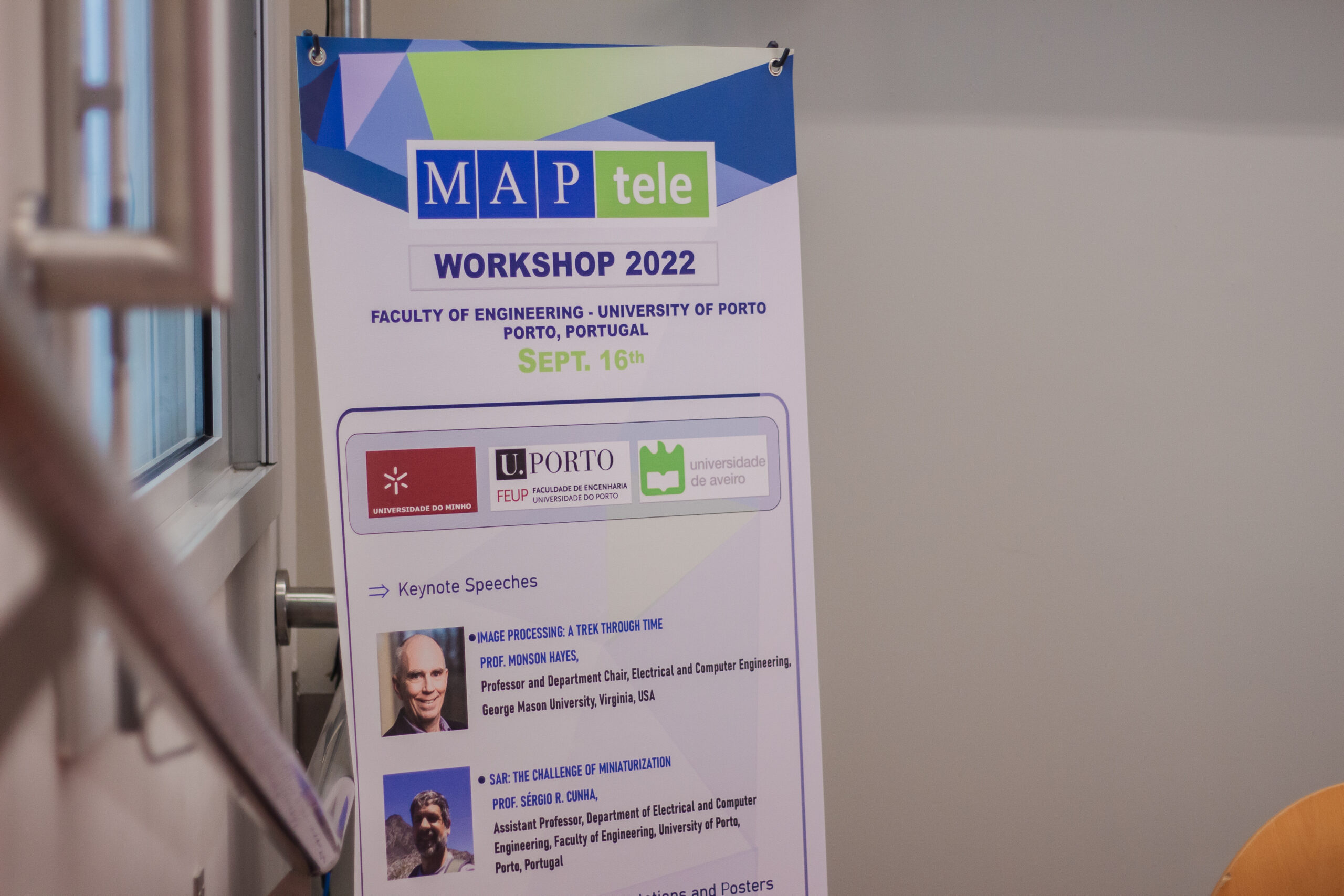
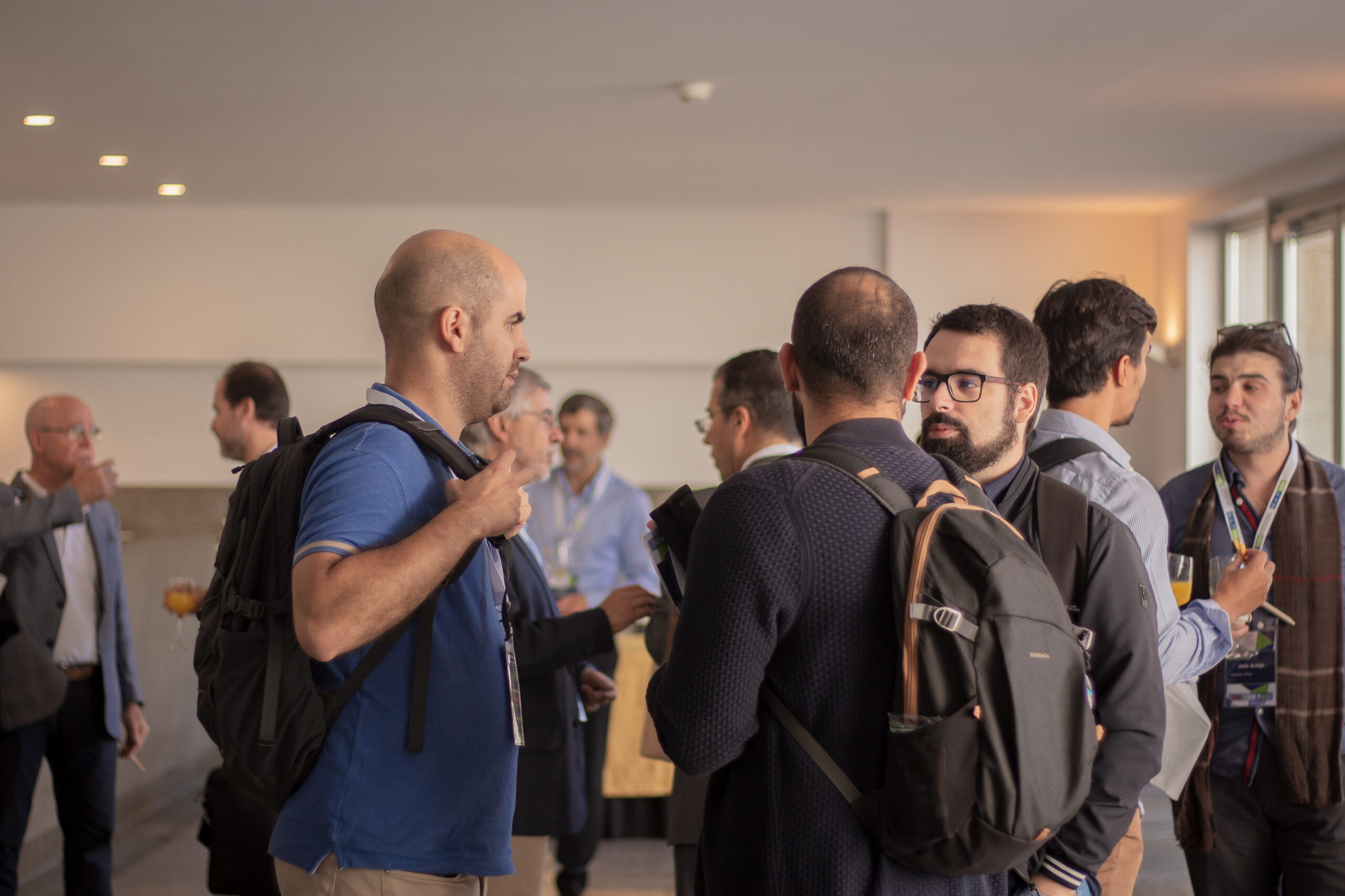
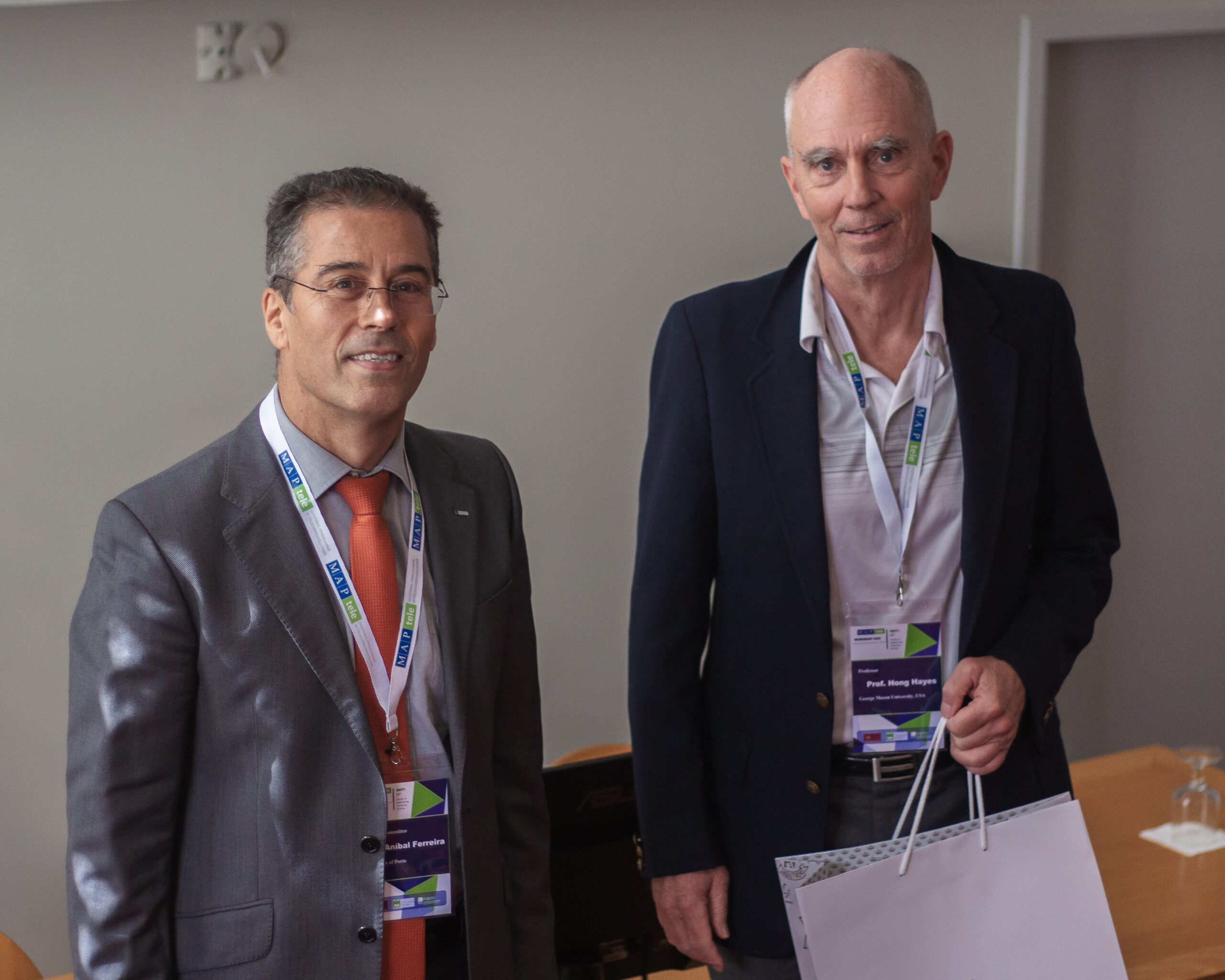
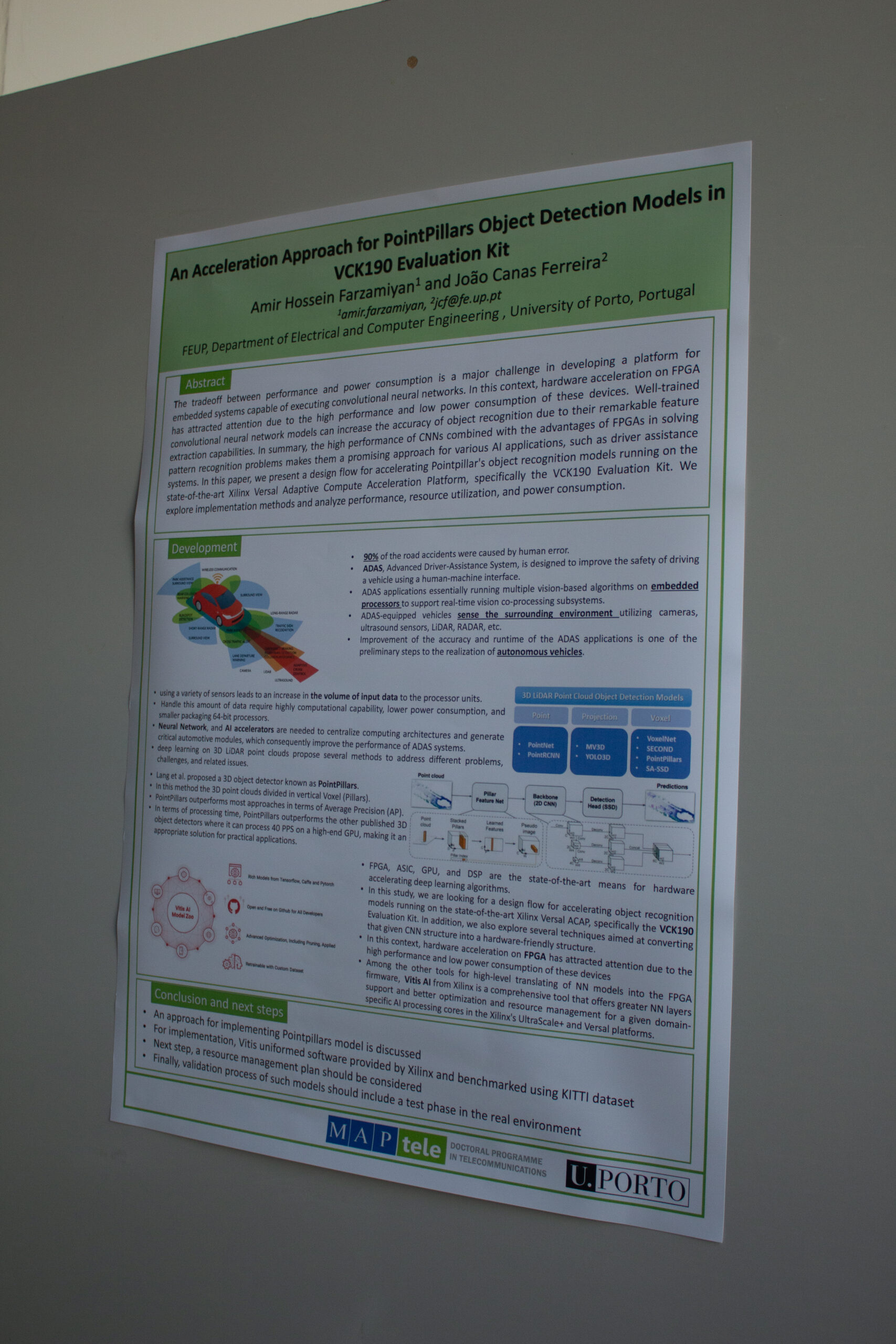
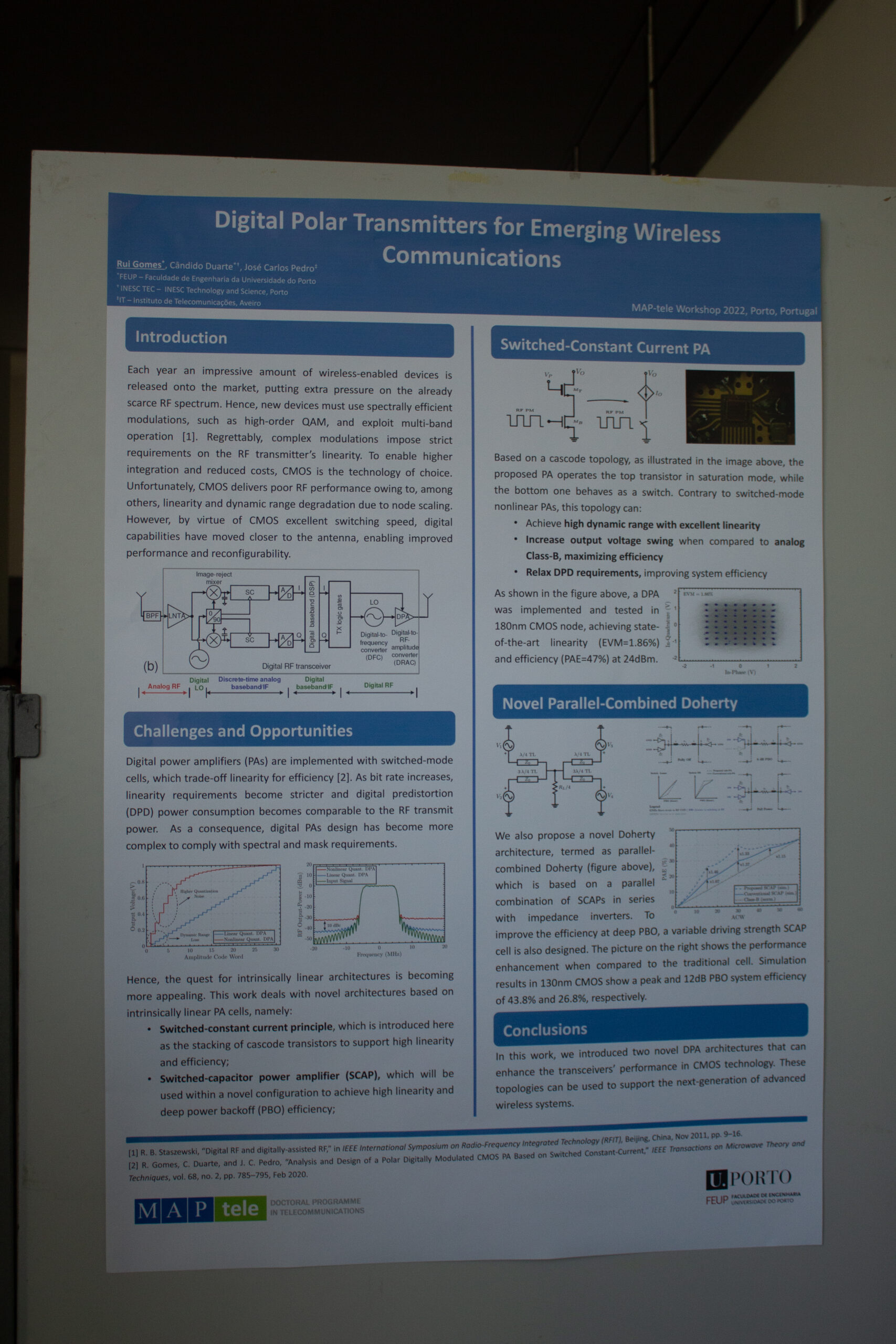
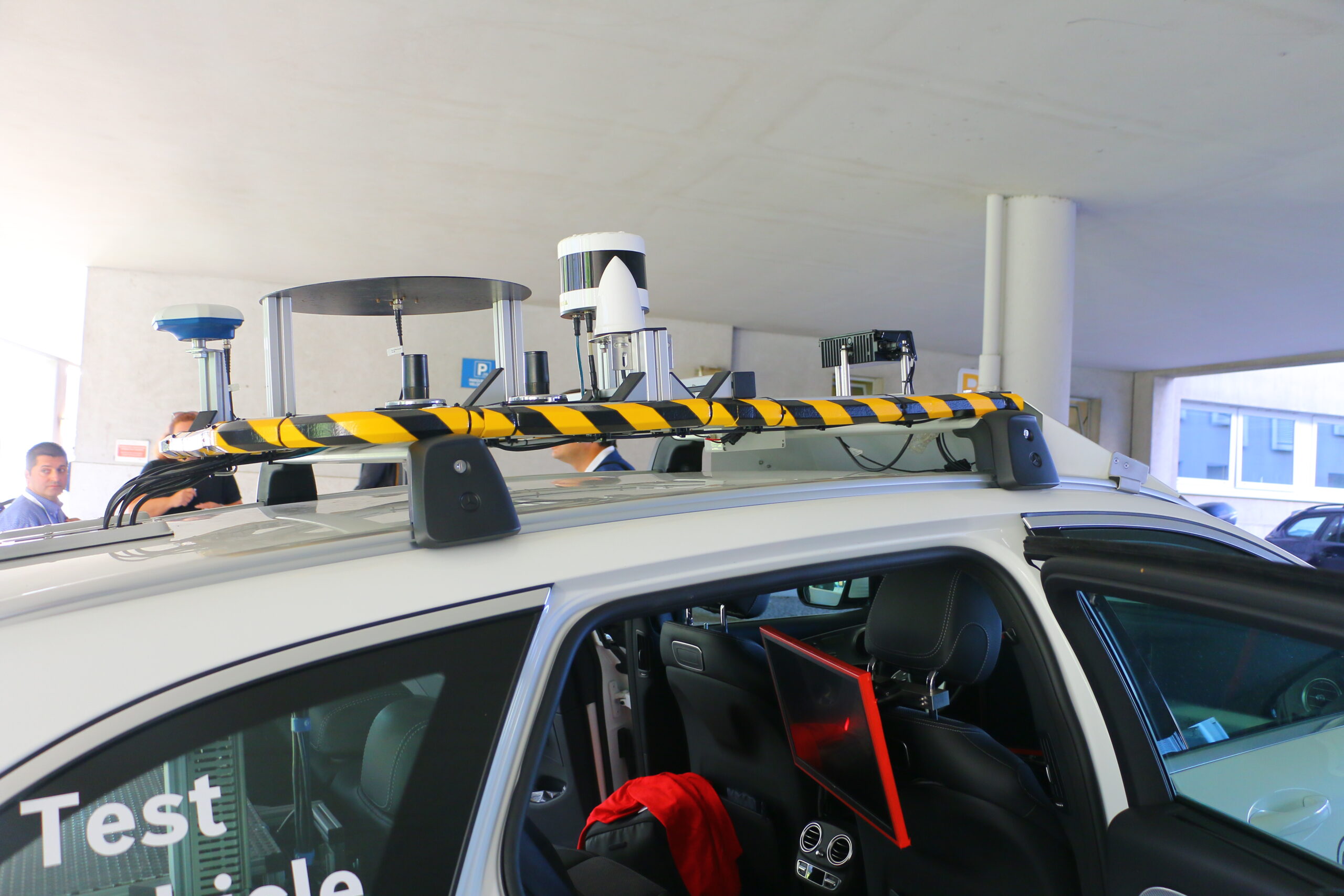
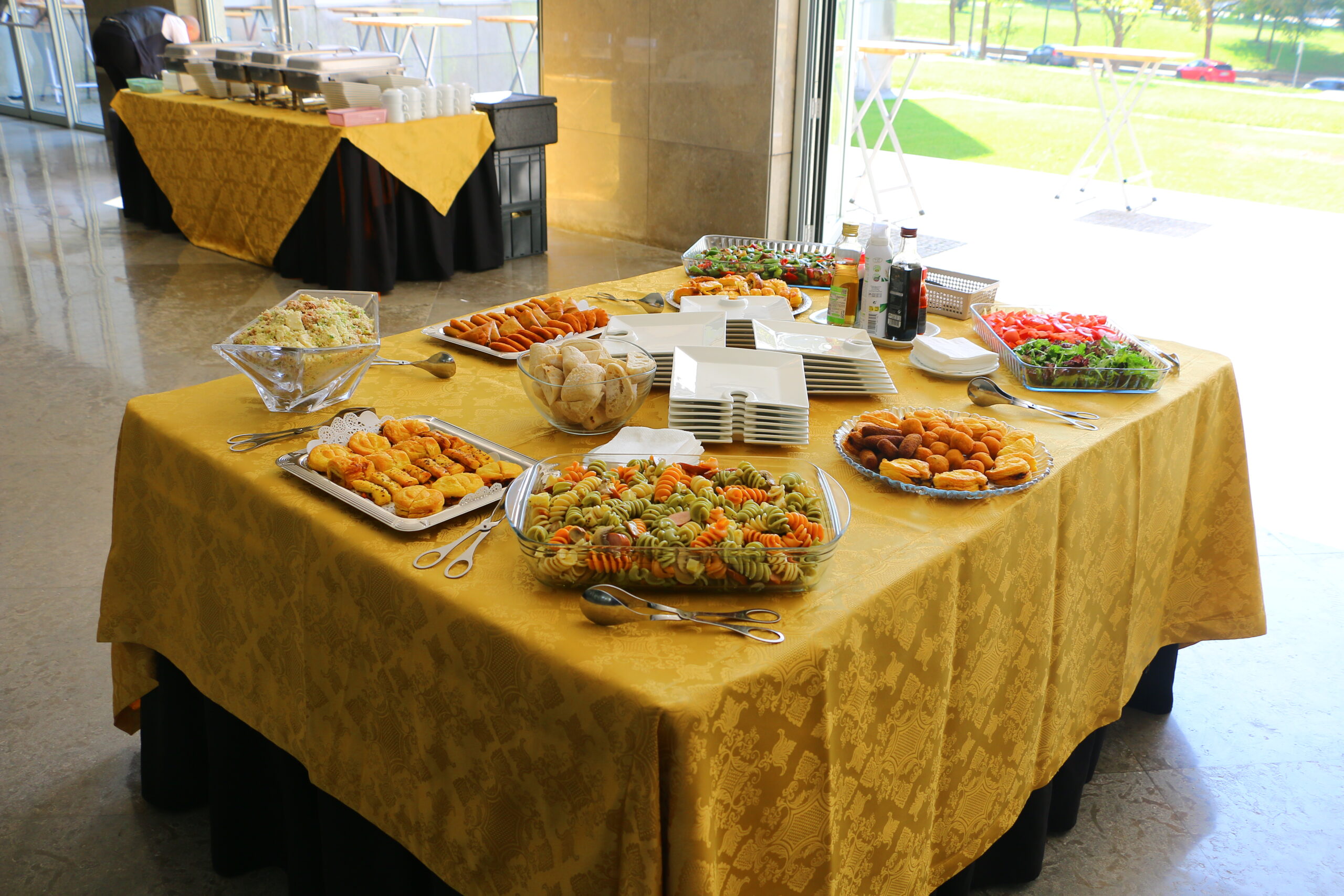
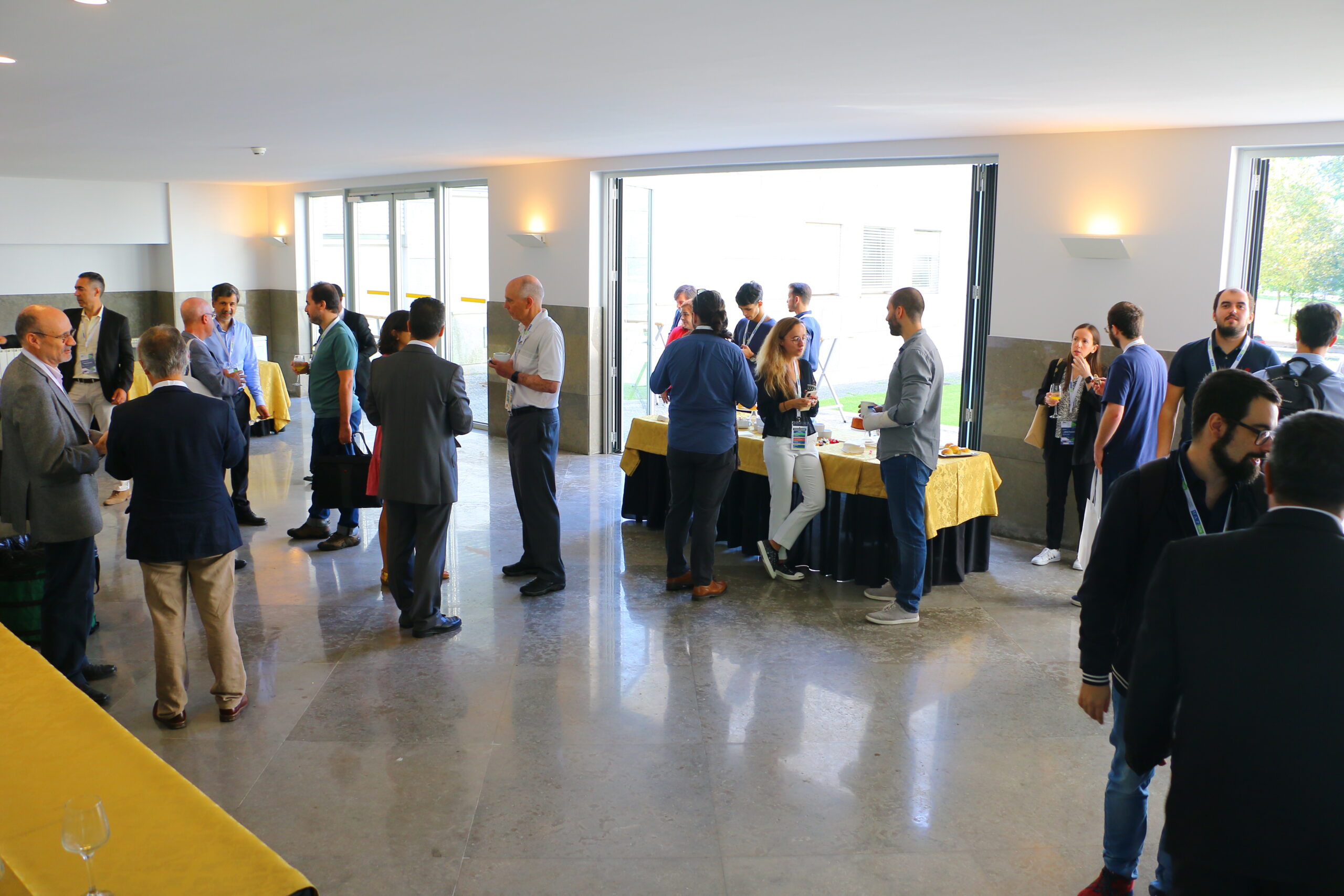
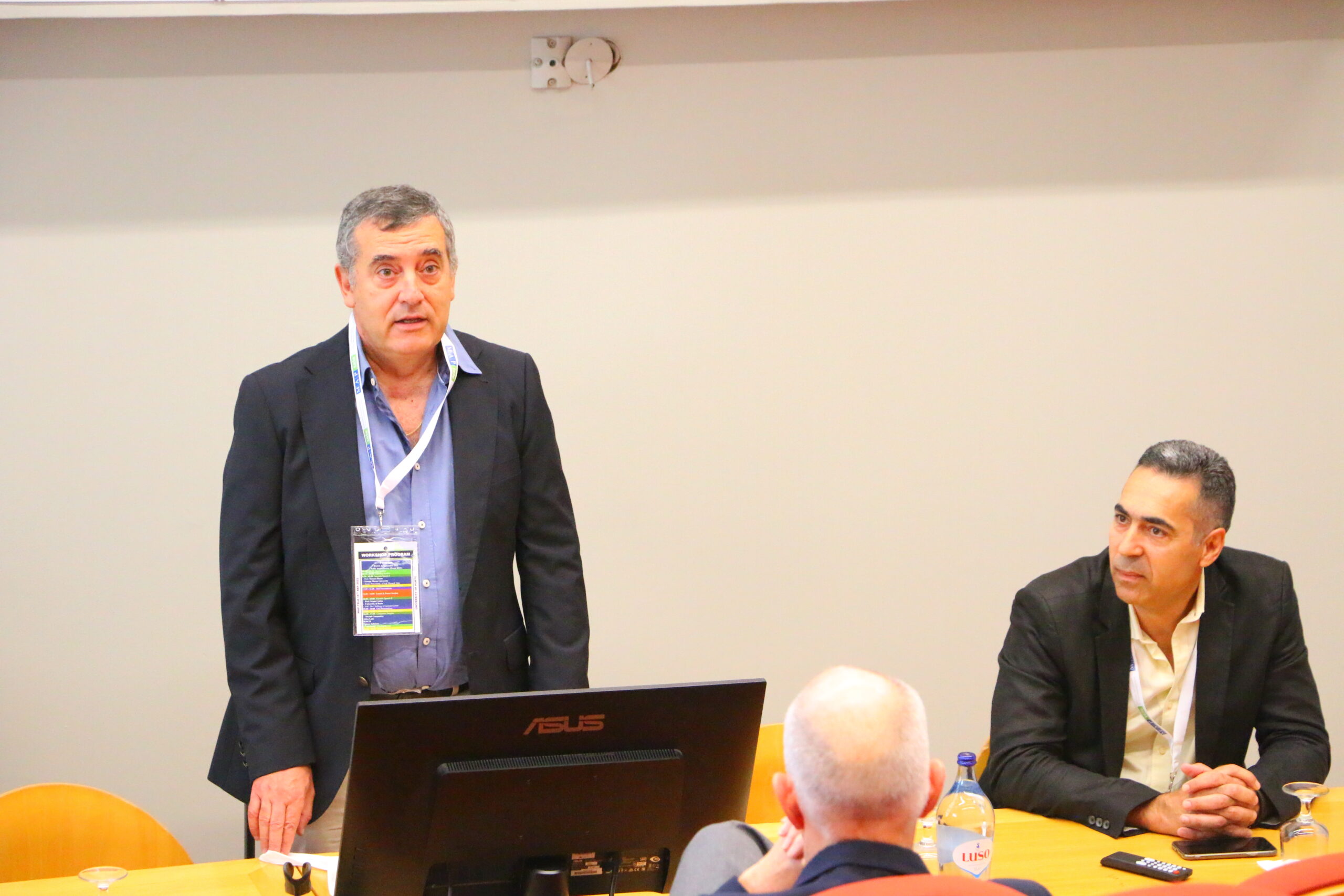
Photos from previous editions